Roaming Hunger + Square + ChowNow: The Food Truck Revenue Stack That Actually Works
These three form a genuine hub-and-spoke stack — Square is the center, and that's not an accident. Here's what actually flows, and what still needs a human to close the loop.
Square for Restaurants is the hub — it's the only tool in this stack that connects to all three of your revenue channels
Roaming Hunger ($99/mo) + Square for Restaurants ($89/mo) + ChowNow ($99/mo).
Roaming Hunger, Square for Restaurants, and ChowNow come up in nearly every food truck technology conversation, but the reason they work well together isn't that all three integrate with each other equally — it's that Square is the hub. Per the current integration map, Square connects natively to both Roaming Hunger and ChowNow; the other two don't connect directly to each other at all. Understanding that structure matters more than knowing that "they integrate."
How event bookings, POS sales, and online pre-orders actually flow through this stack.
Square is the hub — here's what that buys you
- Roaming Hunger event bookings sync into Square as pre-loaded catering orders with deposit amounts, so the crew knows exactly what to prepare and how much was prepaid.
- ChowNow pre-orders feed into Square's order queue, so online and walk-up orders appear in the same kitchen workflow without a second tablet.
- Square's own sales data — event vs. street vs. online — is the one place all three revenue channels actually show up together, since Roaming Hunger and ChowNow don't report to each other directly.
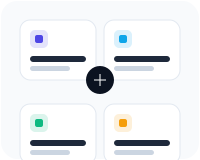
Square sits at the center; Roaming Hunger and ChowNow each connect to it, not to each other.
This is also why Square is usually the right POS choice for an event-heavy truck over Toast Go: Toast Go doesn't currently list a native Roaming Hunger connection, which would break the one link that makes this whole stack a hub instead of three separate silos.
Where the friction actually shows up
What flows automatically vs. what needs a human
| Data | Flows automatically? | Notes |
|---|---|---|
| Roaming Hunger booking → Square order | Deposit amount included | |
| ChowNow pre-order → Square queue | Same kitchen workflow as walk-up | |
| Menu/price changes across ChowNow and Square | Two separate menus, updated by hand | |
| Square sales → QuickBooks Online | Direct sync available | |
| Event lead quality scoring | Roaming Hunger doesn't flag low-conversion sources |
- Roaming Hunger's event lead quality varies by market — some leads are price-shopping organizers who never book, and Square doesn't automatically flag which event sources actually convert.
- ChowNow's branded ordering page requires separate menu maintenance from Square's POS menu, so a price change needs to be made twice.
- None of these three handles full general-ledger accounting — you'll still want QuickBooks Online ($90/mo) to turn Square's sales data into clean financials.
The actual takeaway
Good default doesn't mean zero configuration. The dual-menu maintenance gap between ChowNow and Square catches most trucks off guard, and it's exactly the kind of integration-fit detail our engine is built to weigh — not just whether a tool is popular.
Run the free audit to see the full stack we'd build for a food truck your size, with integration fit already factored in.
- What Should a 6-Person Food Truck Actually Pay for Software?
- Square for Restaurants vs. Toast Go: Which Food Truck POS Actually Fits?
- Best Food Truck Software: Matching Tools to How You Actually Operate
- Signs Your Food Truck Has SaaS Sprawl (And What It's Costing You)
- Switching Food Truck POS Systems: What It Actually Costs (Not Just the Monthly Fee)